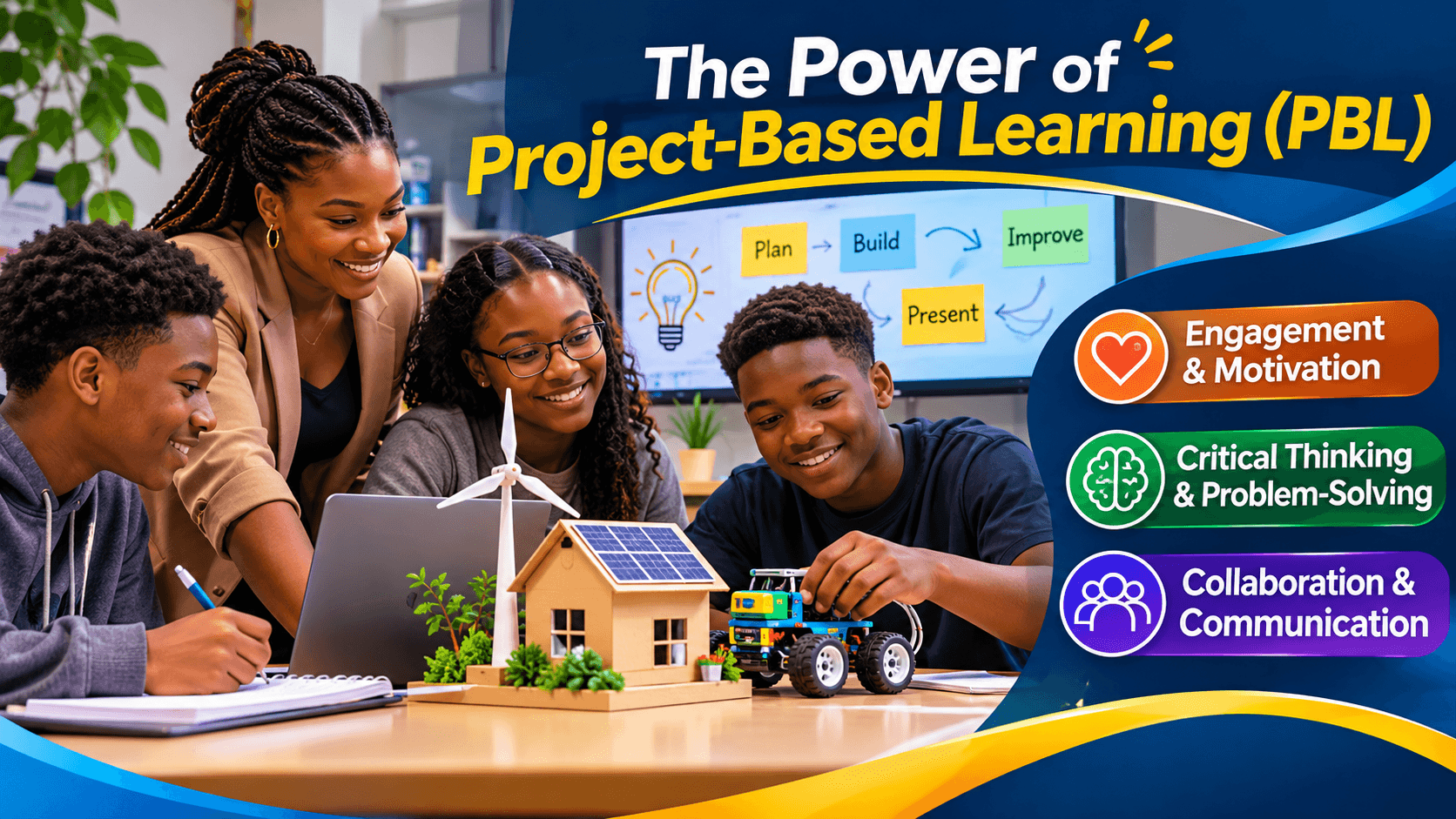
The Power of Project-Based Learning (PBL): Building Skills for Real-World Success
The Power of Project-Based Learning (PBL)
Learning becomes more meaningful when students are given the opportunity to experience it rather than simply read about it. Project-Based Learning (PBL) creates this opportunity by allowing students to explore real-life situations, work through challenges, share ideas, and discover solutions. It transforms learning from something students are expected to do into something they genuinely want to be part of.
The effectiveness of PBL is rooted in three important elements:
1. Engagement and Motivation
Students are naturally more interested in learning when they can see how it connects to their everyday lives. Through real-world projects, they become active participants rather than passive listeners. They ask questions, explore new ideas, make discoveries, and develop a sense of ownership over their learning. This experience builds curiosity, confidence, and a genuine desire to learn.
2. Critical Thinking and Problem-Solving
Not every problem has an immediate or straightforward answer. PBL gives students the opportunity to face challenges, make mistakes, reconsider their ideas, and try different approaches. In the process, they learn to think independently, make informed decisions, and develop creative solutions. More importantly, they begin to understand that mistakes are not failures but valuable opportunities to learn and improve.
3. Collaboration and Communication
Learning is also about understanding and connecting with other people. When students work together on projects, they learn to listen to different opinions, express their thoughts, share responsibilities, and respect one another's contributions. These interactions help them develop meaningful relationships, strengthen their communication skills, and appreciate the value of teamwork.
Ultimately, Project-Based Learning goes beyond completing assignments or achieving good grades. It helps students develop the confidence, creativity, resilience, and practical skills they need to navigate real-life situations. When students are given the opportunity to explore, create, collaborate, and solve meaningful problems, learning becomes an experience that stays with them long after they leave the classroom.
The goal is not simply to teach students what to think, but to give them the confidence and ability to think, create, question, and make a difference.